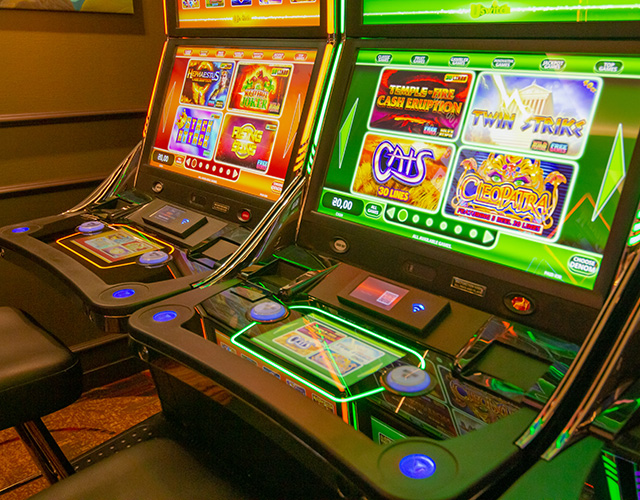
The glitter of neon lights that once defined the casino experience is now being projected onto screens worldwide. In 2026, the balance has tipped: more than half of all gambling revenue is generated online, and the trend shows no sign of reversing. Players who once trekked to the Strip or Monte Carlo can now spin a 5‑reel slot, challenge a dealer at a virtual blackjack table, or place a live‑sports wager from a coffee shop in Dubai.
What fuels this shift? A confluence of ultra‑low‑latency cloud servers, AI‑enhanced game design, and regulatory frameworks that finally give digital operators the same consumer‑protection guarantees once reserved for brick‑and‑mortar venues. At the same time, smartphones equipped with 5G have become the de‑facto casino floor, and new payment rails—cryptocurrency, instant e‑wallets, and regional debit solutions—make moving money as quick as a spin of the wheel.
This article peels back the layers of that transformation. We will trace the technology that powers today’s high‑fidelity platforms, map the legal currents reshaping the market, and investigate how trust, economics, and community are being rebuilt in a purely digital arena. By the end, you’ll see why the next decade belongs to operators that can blend immersive tech with responsible‑gaming safeguards, and how you, the modern gambler, can navigate this brave new world with confidence.
From Slot Machines to Algorithms – The Tech Evolution Behind Modern Gaming
The hardware that once lived in a casino’s backroom—dedicated RNG chips and isolated servers—has been replaced by elastic cloud infrastructures. Providers such as Amazon Web Services and Microsoft Azure now host thousands of game instances in data centers that sit closer to the player, shaving milliseconds off latency and delivering true 4K graphics without a console.
Software advances are equally dramatic. AI‑driven dealers interpret player gestures, adjust voice tone, and even respond to chat cues, creating a sense of presence that rivals a live table in Las Vegas. Meanwhile, virtual‑reality headsets are no longer novelty items; titles like VR Blackjack Royale let users walk around a digital casino floor, pick up chips, and watch a dealer shuffle in real time.
Hybrid models have emerged, too. Progressive jackpot networks now use blockchain‑based smart contracts to guarantee provably‑fair payouts, while quantum‑resistant encryption keeps player data safe from future threats. The result is a seamless experience where a 3‑line slot on a desktop feels as immersive as a physical machine, complete with realistic soundscapes, haptic feedback, and adaptive volatility that scales to the player’s bankroll.
| Feature |
Traditional Online |
Cloud‑Native Experience |
| Latency |
150‑250 ms |
30‑70 ms |
| Graphics |
1080p, 60 fps |
4K, 120 fps |
| Scalability |
Fixed server pools |
Auto‑scale on demand |
| Fairness verification |
RNG logs |
Real‑time blockchain audit |
Regulatory Waves – How Global Laws Are Shaping Online Play
Legislators have finally caught up with the digital rush. In the European Union, the revised Gaming Regulation Directive 2025 introduced a unified licensing regime, requiring operators to obtain a single EU passport and adhere to strict AML and player‑protection standards. This has simplified cross‑border access, allowing a Swedish player to log into a Malta‑licensed site without encountering the previous maze of national permits.
North America is witnessing a patchwork of reforms. The United States, after the 2024 Remote Gaming Act, now permits fully regulated online poker in 22 states, each with its own tax rate ranging from 5 % to 12 % of gross gaming revenue. Meanwhile, Canada’s Digital Gaming Framework mandates that all operators host their RNGs on Canadian soil, boosting data sovereignty and creating a new niche for “safe casino UAE” players who seek offshore options with local compliance.
The Middle East, traditionally cautious, has opened a controlled window. The United Arab Emirates introduced a pilot licensing program in 2025 that authorizes a handful of operators to offer limited‑stake games to residents with verified identities. Industry experts at online casino uae have noted that the pilot’s first‑quarter report recorded a 27 % increase in licensed player registrations, underscoring the appetite for regulated digital gambling in the region.
These regulatory currents are not merely bureaucratic; they shape the user experience. Stronger KYC protocols reduce fraud, while mandated responsible‑gaming tools—self‑exclusion, loss limits, and real‑time wagering alerts—are now baked into most platforms. Taxation models are also evolving; several jurisdictions now tax revenue based on net profit rather than gross intake, encouraging operators to invest in fair‑play technology and player‑support services.
Player Trust and Transparency – The Role of Independent Audits
When you click “Play Now,” the biggest question is often: Is the game really fair? Independent audits answer that by verifying the randomness of outcomes and the integrity of payout calculations. Reputable testing houses such as eCOGRA, iTech Labs, and GLI examine the underlying RNG code, run millions of simulated spins, and publish RTP (Return to Player) percentages that must fall within a narrow tolerance band.
Beyond RNG checks, third‑party audits now cover the entire player journey. Auditors review withdrawal timelines, bonus‑clearance algorithms, and the efficacy of responsible‑gaming modules. A recent audit of a major UK operator revealed that 98 % of withdrawal requests were processed within 24 hours, a metric now used as a benchmark for “fast payout” claims across the industry.
Responsible‑gaming tools have become a regulatory requirement in many markets. Real‑time wagering alerts flag when a player’s bet size exceeds a preset percentage of their bankroll, while AI‑driven behavior analysis can automatically trigger self‑exclusion for signs of problem gambling. Operators that integrate these safeguards often display a “Safe Casino UAE” badge, signaling compliance with both local and international standards.
Professional reviewers at Calvaria regularly reference these audit reports when compiling their online casino ranking guides. By cross‑checking certification dates, payout logs, and player‑complaint ratios, they help gamblers cut through marketing hype and focus on platforms that have demonstrable safety records.
Key audit takeaways for players
- Verify the presence of a current eCOGRA or iTech Labs seal.
- Check that the site publishes its RTP per game; reputable titles list figures between 95 % and 98 %.
- Look for transparent withdrawal policies—no hidden fees, clear timeframes, and multiple payout options.
Economic Impact – Where the Money Flows in a Digital Casino Economy
The shift to digital has rewritten the industry’s financial map. Global online gambling revenue topped $135 billion in 2025, a 12 % rise from the previous year, while brick‑and‑mortar earnings plateaued at $70 billion. This surge is powered by lower overhead: no physical floor, reduced staff costs, and the ability to scale instantly with demand spikes from major sporting events.
Job creation has migrated from dealers and floor managers to software engineers, data scientists, and cybersecurity specialists. In 2026, the European Union reported a 15 % increase in tech‑focused employment directly linked to licensed online operators, a trend echoed in North America’s “gaming‑tech corridor” stretching from Nevada to Toronto.
Tax revenue has also been reallocated. Countries that previously relied on casino resort taxes now collect a digital levy—often a percentage of net gaming revenue. For example, Malta’s gaming tax was adjusted in 2025 to 5 % of net profit, generating an additional €120 million for public services while incentivizing operators to invest in player‑protection measures.
A side effect of this redistribution is the rise of ancillary services. Payment processors, e‑wallet providers, and KYC verification firms have seen transaction volumes double, creating a vibrant ecosystem that feeds back into the core gambling market.
Social Experience – Building Community Without a Physical Table
Live‑dealer streams have become the social glue of the online world. Players join a virtual table via high‑definition video, chat with the dealer, and even tip using in‑app currency. Platforms like LiveRoulette Pro integrate real‑time sentiment analysis, adjusting dealer chatter based on player excitement levels, which keeps the atmosphere lively despite the physical distance.
Chat functions have evolved from simple text boxes to moderated community hubs. Gamers can share strategies, celebrate big wins, and organize private tournaments. Loyalty programs now incorporate gamified milestones—collecting “experience points” for each wager, unlocking exclusive tables, and earning personalized welcome bonus offers that reflect individual play styles.
Social betting rooms around major events—such as the FIFA World Cup or the Dubai World Cup—allow participants to place side bets with friends, track leaderboards, and post instant reactions. This blend of competition and camaraderie mirrors the buzz of a casino floor, proving that community can thrive without a shared tablecloth.
Community features gaining traction
- Voice‑enabled dealer interactions.
- Real‑time leaderboards for slot tournaments.
- Integrated social media sharing of win clips.
Mobile‑First Gaming – The Smartphone as the New Casino Floor
5G rollout across Asia, Europe, and the Middle East has turned smartphones into high‑performance gaming rigs. Network latency now averages under 20 ms, enabling seamless live‑dealer streams and instant bet placement. Developers respond with ultra‑light UI frameworks that load in under two seconds, even on mid‑range devices.
Micro‑transactions have refined the way players fund their accounts. Instead of large deposits, users can top up with as little as $5 via Apple Pay, Google Pay, or regional e‑wallets like PayFort. This “pay‑as‑you‑play” model aligns with the rise of shorter session lengths—average mobile playtime is 18 minutes per visit, compared with 45 minutes on desktop.
Security remains paramount. Mobile SDKs now embed biometric authentication (fingerprint, facial recognition) and token‑based encryption, reducing fraud rates by an estimated 30 % since 2024. Moreover, many operators bundle a “mobile‑only welcome bonus” that doubles the initial deposit up to $200, encouraging new users to test the platform without committing large sums.
| Device |
Avg. Load Time |
Avg. Session |
Typical Bonus |
| iPhone 15 (5G) |
1.8 s |
22 min |
150 % up to $200 |
| Samsung Galaxy S24 |
2.1 s |
19 min |
100 % up to $150 |
| Mid‑range Android |
2.8 s |
15 min |
50 % up to $100 |
The Rise of Hybrid Venues – Merging Physical and Digital Play
Casinos are no longer confined to a single format. In Dubai, flagship resorts have installed VR lounges where patrons wear headsets to enter a fully rendered metaverse casino while still enjoying the tactile feel of a real chip in hand. These spaces blend the excitement of a physical venue with the limitless game library of an online operator.
On‑site digital kiosks are another hybrid innovation. Guests can log into their personal accounts, claim a personalized welcome bonus, and instantly join a live‑dealer table without waiting for a human dealer to be assigned. The kiosks also integrate QR‑code payments, allowing instant transfers from a player’s e‑wallet to the casino’s cashless system.
Hybrid models also open doors for regulated cross‑border play. A tourist in London can sit at a physical slot machine that streams a game hosted on a Malta‑licensed server, ensuring the outcome is verified by a European audit while the player enjoys the ambience of a historic gambling hall.
Key benefits of hybrid venues
- Increased foot traffic from tech‑savvy tourists.
- Real‑time data collection for personalized offers.
- Seamless transition between cash and digital balances.
Data‑Driven Personalization – Tailoring the Game to Each Player
AI engines now ingest billions of data points per day—from bet size and session length to in‑game chat sentiment. This information fuels hyper‑personalized dashboards that suggest games matching a player’s volatility preference, highlight promotions that align with recent betting patterns, and issue risk‑management alerts when wagering exceeds a preset threshold.
For example, a player who frequently enjoys high‑RTP slots (96 %–98 %) will see a curated carousel featuring titles like Mega Fortune Starlight and Gonzo’s Quest. Simultaneously, the system may push a limited‑time “double your first deposit” welcome bonus that expires within 48 hours, creating urgency based on the user’s historical response to time‑bound offers.
Behavioral analytics also help operators detect problem gambling early. Sudden spikes in betting frequency, combined with longer session times, trigger automated outreach—offering self‑exclusion tools or connecting the player with a support hotline. This data‑driven approach not only protects players but also satisfies regulators demanding proactive risk mitigation.
Personalization checklist for operators
- Segment users by RTP preference, volatility tolerance, and deposit behavior.
- Deploy dynamic UI elements that adapt in real time.
- Integrate AI alerts for both promotional relevance and responsible‑gaming triggers.
Environmental Considerations – Green Gaming in the Digital Age
The carbon footprint of a traditional casino floor is substantial: massive HVAC systems, lighting, and constant gaming‑machine power draw contribute to high energy consumption. Estimates suggest a large resort consumes up to 30 MWh per day, much of it sourced from non‑renewable grids.
By contrast, cloud‑based platforms consolidate workloads into hyperscale data centers that increasingly run on renewable energy. Major providers report that over 70 % of their global compute power now originates from wind, solar, or hydro sources. When a player streams a live‑dealer game on a mobile device, the marginal energy use is measured in a few watt‑hours—orders of magnitude lower than the energy needed to keep a physical casino operational.
The industry is also adopting carbon‑offset programs. Some operators purchase renewable‑energy certificates for every $1 billion in gross gaming revenue, aiming for net‑zero emissions by 2035. Additionally, digital‑only bonuses reduce the need for printed marketing materials, further shrinking the environmental impact.
Future Forecast – What the Next Decade Holds for Online Casinos
Looking ahead, the metaverse will become the ultimate casino frontier. Fully immersive worlds will host 3D tables where avatars interact with AI dealers that can read facial expressions via avatar cues, adjusting game difficulty in real time. Blockchain will underpin “provably‑fair” engines, allowing players to verify each spin’s outcome through cryptographic hashes posted on public ledgers.
Regulatory technology will evolve alongside. AI‑mediated compliance platforms will monitor transactions, flag suspicious patterns, and automatically generate reports for regulators, cutting compliance costs by up to 40 %. Meanwhile, quantum‑resistant encryption will safeguard player data against future decryption threats.
Payment ecosystems will converge on a single, instant settlement layer. By 2030, the average withdrawal time is projected to drop to under five minutes, regardless of currency or jurisdiction, thanks to interoperable digital‑currency bridges.
These innovations will reshape player expectations. Gamers will demand seamless cross‑device experiences, transparent odds, and socially rich environments that feel as real as a physical casino floor. Operators that can blend cutting‑edge tech with robust responsible‑gaming frameworks will dominate, turning the digital shuffle into a permanent, profitable rhythm.
Conclusion
The convergence of cloud power, AI personalization, and progressive regulation has positioned online casinos as the leading entertainment medium of 2026 and beyond. Players now enjoy casino‑grade graphics, instant payouts, and community features from the palm of their hand, while regulators enforce safeguards that were once only possible in brick‑and‑mortar venues.
As hybrid lounges open, metaverse tables materialize, and sustainable gaming practices take root, the industry will continue to outpace its physical counterpart. For gamblers seeking excitement, safety, and innovation, the digital shuffle isn’t just a trend—it’s the new standard, and the deck is only getting richer.