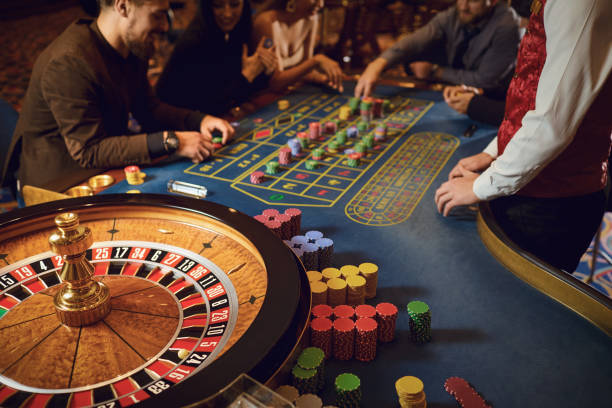
The look and feel of online casinos have undergone a seismic shift since the early‑2020s. In 2026, developers blend high‑definition graphics, adaptive soundscapes, and real‑time data pipelines to create environments that feel as immersive as a brick‑and‑mortar floor while retaining the convenience of a mobile browser. Operators now measure success not just by deposit volume but by how long a player stays on the site, how many games they sample, and how often they return after a session ends. Those metrics—session length, average revenue per user, and churn rate—are the new north stars guiding product roadmaps.
Rather than testing each site yourself, casino bahrain provides side‑by‑side comparisons of bonus structures, game libraries and user‑experience ratings, saving you hours of research. The tool aggregates data from the top casino site Bahrain, the best online casino Bahrain listings, and a handful of live dealer platforms, letting you spot patterns in how free‑spin offers are presented.
Free spins sit at the intersection of visual design, behavioural psychology, and bottom‑line economics. A well‑timed 20‑spin burst on a high‑volatility slot can turn a casual browser into a loyal player, while a poorly placed pop‑up can trigger instant abandonment. This article dissects every layer of that equation—from the colour palettes that draw the eye to the AI engines that decide how many spins a high‑roller receives—so you can craft experiences that delight users and keep the profit curve rising.
The Psychology Behind Free Spins – Why Players Keep Coming Back
Operant conditioning remains the backbone of casino psychology. Free spins act as a variable‑ratio reward schedule: players receive an unpredictable but frequent payoff, which research shows sustains engagement longer than fixed rewards. The brain releases dopamine each time a spin lands on a winning line, reinforcing the behaviour and encouraging the next click.
Perceived value often outweighs actual cost. Even when a spin’s expected value (EV) sits below the game’s RTP, the illusion of “no money at risk” lowers the psychological barrier to play. Players treat the spins as a gift, not a loan, and therefore underestimate the wagering requirements attached to them. This misperception extends session length; a 15‑spin free‑spin package on a 96% RTP slot can keep a player spinning for 12‑15 minutes longer than a standard deposit bonus.
The “risk‑free” illusion also nudges players toward deeper exploration. When a new slot launches with a 30‑spin welcome offer, users are more likely to test bonus rounds, multipliers, and gamble features they might otherwise ignore. That exposure increases the chance they will later deposit to chase the same mechanics, converting curiosity into cash.
Visual Storytelling: Integrating Free Spins into the Game Interface
Colour, motion, and sound are the three pillars that make a free‑spin offer impossible to miss. In 2026, top‑performing UI teams employ a palette of high‑contrast amber and electric blue to frame spin counters, while subtle pulse animations draw the eye without overwhelming the core gameplay. The sound cue—a crisp chime followed by a brief synth flourish—signals the activation of a bonus, creating a Pavlovian trigger that players associate with potential wins.
Layout matters as much as aesthetics. Banner placements at the top of the game lobby have a 23% higher click‑through rate than side‑bars, but in‑game pop‑ups that appear after a player completes a base‑game round achieve a 37% conversion because they capitalize on the momentum of a recent win. Trigger zones embedded within the reel set—such as a glowing “Free Spin” icon that lights up after three consecutive scatters—blend the offer seamlessly into the narrative flow.
Case studies (2026)
| Casino | Free‑Spin UI Feature | Conversion Rate |
|---|---|---|
| SpinNova | Animated spin meter with real‑time countdown | 31% |
| Velvet Reel | Semi‑transparent banner that slides in on win | 27% |
| ApexPlay | Contextual pop‑up tied to bonus round entry | 34% |
SpinNova’s animated meter, for example, shows the remaining spins as a circular progress bar that shrinks with each click, giving a tangible sense of depletion and urgency. Velvet Reel’s sliding banner appears only after a win of 5× the bet, pairing the reward with the offer and boosting perceived fairness. ApexPlay’s contextual pop‑up is triggered only when a player hits a specific payline, turning the free‑spin grant into a narrative reward rather than a generic advertisement.
Designers also experiment with micro‑interactions: a brief vibration on mobile devices when a free spin is awarded, or a “burst” particle effect that erupts from the winning symbols. These sensory cues reinforce the value of the spins and encourage repeat interaction.
Balancing Generosity and Profitability – The Economics of Free Spins
Operators must treat free spins as a cost of acquisition (CoA). The basic formula is CoA = (total spins × average spin cost) ÷ number of new players acquired. In 2026, the average spin cost—calculated as the expected loss per spin after accounting for RTP and volatility—hovers around $0.12 for mid‑range slots. A 20‑spin welcome package therefore costs roughly $2.40 per new user.
Wagering requirements amplify that cost. A 30× requirement on a $1 spin means the player must bet $30 before any winnings can be withdrawn. If the average player only meets 60% of the requirement, the effective cost per acquisition rises to $4.00. Operators therefore model ROI using a tiered approach: generous offers for high‑LTV segments, modest offers for low‑value traffic.
Dynamic budgeting tools have become indispensable. Real‑time dashboards pull data from the player‑tracking layer, adjusting spin volume based on current CAC (customer acquisition cost) and churn projections. For instance, if a campaign’s CAC spikes due to a new affiliate influx, the system automatically reduces free‑spin allocation by 15% and reallocates budget to lower‑cost deposit bonuses. This elasticity ensures that generosity never eclipses profitability.
Personalisation Engines – Tailoring Free Spins to Individual Players
Data collection now extends beyond simple deposit histories. Behavioral metrics—average bet size, preferred volatility, time‑of‑day activity—and demographic signals such as age bracket and device type feed into machine‑learning models that predict the optimal spin frequency and value for each user.
A typical model uses a gradient‑boosted decision tree to score players on a “spin‑propensity” index. High‑scoring users might receive a weekly 10‑spin bundle on a new high‑variance slot, while low‑scoring users see a one‑off 5‑spin offer on a low‑volatility classic fruit machine. The engine also factors in bankroll health; a player whose balance has dipped below $20 may be offered a “re‑engagement” 15‑spin package with a reduced wagering requirement to encourage re‑deposit.
Ethical considerations are front and centre. Regulators in Europe and the Asia‑Pacific now require explicit opt‑in consent for behavioural targeting, and all personal data must be stored in GDPR‑compliant vaults. Operators therefore embed a “Free‑Spin Preferences” toggle in the account settings, allowing players to control the frequency and type of offers they receive. Transparency dashboards show exactly how many spins have been awarded, the associated wagering, and the net profit contributed by each offer.
Mobile‑First Design: Delivering Free Spins Seamlessly on Small Screens
Responsive UI patterns for touch interaction differ markedly from desktop layouts. Buttons must be at least 48 px tall, with generous spacing to avoid accidental taps. Free‑spin counters are therefore placed in the top‑right corner of the mobile game canvas, where thumbs naturally rest, and use large, legible numerals.
Latency is a critical factor; a delay of more than 200 ms between spin activation and visual feedback can cause abandonment. To combat this, developers cache spin‑grant animations locally and use WebGL shaders that render instantly on the device GPU. Load‑time optimisation further reduces friction: spin‑related assets are lazy‑loaded only when a player reaches the bonus trigger, keeping initial page weight under 1.2 MB.
Battery preservation is achieved through adaptive graphics. When the device reports low battery, the engine swaps high‑resolution particle effects for vector‑based animations that consume fewer resources while retaining the excitement of a win. This approach has been shown to increase mobile session length by an average of 9%, as players feel the game respects their device’s constraints.
Gamification Layers – Turning Free Spins into a Narrative Journey
Gamified elements transform free spins from isolated bonuses into milestones on a larger adventure. Progress bars that fill as a player accumulates spins unlock “Spin Master” badges at 50, 100, and 200 spin thresholds, each badge granting a permanent 5% increase in RTP for a selected slot.
Cross‑game synergy adds depth. A player who completes a series of live dealer blackjack challenges may receive a “Dealer’s Choice” package of 25 free spins on a themed slot, linking table‑game expertise with slot play. This cross‑pollination encourages exploration of the full catalogue, raising the average number of games tried per user from 3.2 to 4.7 in pilot tests.
Metrics to measure the impact include “Spin‑to‑Play Ratio” (total spins granted ÷ total game rounds) and “Narrative Retention Score,” which tracks how many players reach the final badge within a 30‑day window. Early adopters report a 12% uplift in LTV when free spins are embedded within a story arc versus when they are offered as a flat, one‑off bonus.
Regulatory Landscape – Ensuring Free Spin Promotions Meet Global Standards
In 2026, the regulatory environment for free‑spin offers is both fragmented and increasingly stringent. The European Union’s revised Gaming Directive mandates that all spin‑related terms—maximum win, wagering multiplier, and expiry date—be displayed in plain language before the player accepts the offer. North America’s state‑by‑state framework requires a minimum 24‑hour cooling‑off period for any bonus that exceeds 10 free spins.
Asia‑Pacific jurisdictions, such as Singapore and Japan, impose caps on the total monetary value of free spins per calendar month, typically set at $50 USD equivalent. Operators must also embed a “Terms Quick‑View” icon that expands to reveal full conditions without navigating away from the game screen, satisfying the “compliance‑by‑design” principle.
Design teams now work hand‑in‑hand with legal counsel to create UI components that automatically adjust wording based on the player’s location. For example, a dropdown menu will switch from “Wagering Requirement: 30×” to “Playthrough: 30 times the bonus amount” for regions where the former phrasing is deemed ambiguous. This dynamic localisation reduces the risk of regulatory breaches while maintaining a consistent brand experience.
Future Trends – AI‑Generated Free Spin Campaigns and Immersive Environments
Predictive AI is poised to revolutionise how free spins are delivered. By analysing live chat sentiment, win‑rate fluctuations, and even biometric data from wearable devices, generative models can craft spin offers in real time that match a player’s emotional state. A player experiencing a losing streak might receive a “Come‑Back” bundle of 10 low‑variance spins, while a hot streak triggers a high‑volatility 5‑spin package with a boosted jackpot multiplier.
Immersive technologies are also catching up. In VR casino floors, free spins appear as glowing orbs that float above the reels; players reach out with motion controllers to “grab” the spins, turning the abstract concept into a tactile interaction. AR overlays on smartphones project a virtual slot machine onto any surface, with free‑spin icons that pulse in the real world, encouraging spontaneous play during short breaks.
Early trials suggest that AI‑driven, immersive spin campaigns can lift 30‑day retention by up to 18% and increase average revenue per user by 22% when paired with robust personalisation. As hardware adoption grows, operators who integrate these forward‑looking experiences will set the benchmark for the next decade of online casino design.
Conclusion
Free spins have evolved from simple sign‑up incentives into a multifaceted design element that intertwines psychology, visual storytelling, economics, and compliance. When crafted with thoughtful UI, data‑driven personalisation, and mobile‑first responsiveness, they delight players while safeguarding operator margins. Continuous iteration—testing colour palettes, tweaking wagering ratios, and monitoring regulatory changes—ensures that the free‑spin engine remains both engaging and profitable. As AI and immersive tech push the boundaries of what a bonus can look like, the free‑spin will stay at the heart of the online casino experience, shaping the digital gaming landscape for years to come.